
Hormones and medications
Using an Estradiol Patch
An estradiol patch releases estrogen through the skin into the bloodstream. It can treat menopause symptoms such as hot flashes and night sweats. Some products are changed weekly and others twice weekly. The package leaflet for your exact patch determines where it goes, how often it is changed, and what to do if it comes loose.
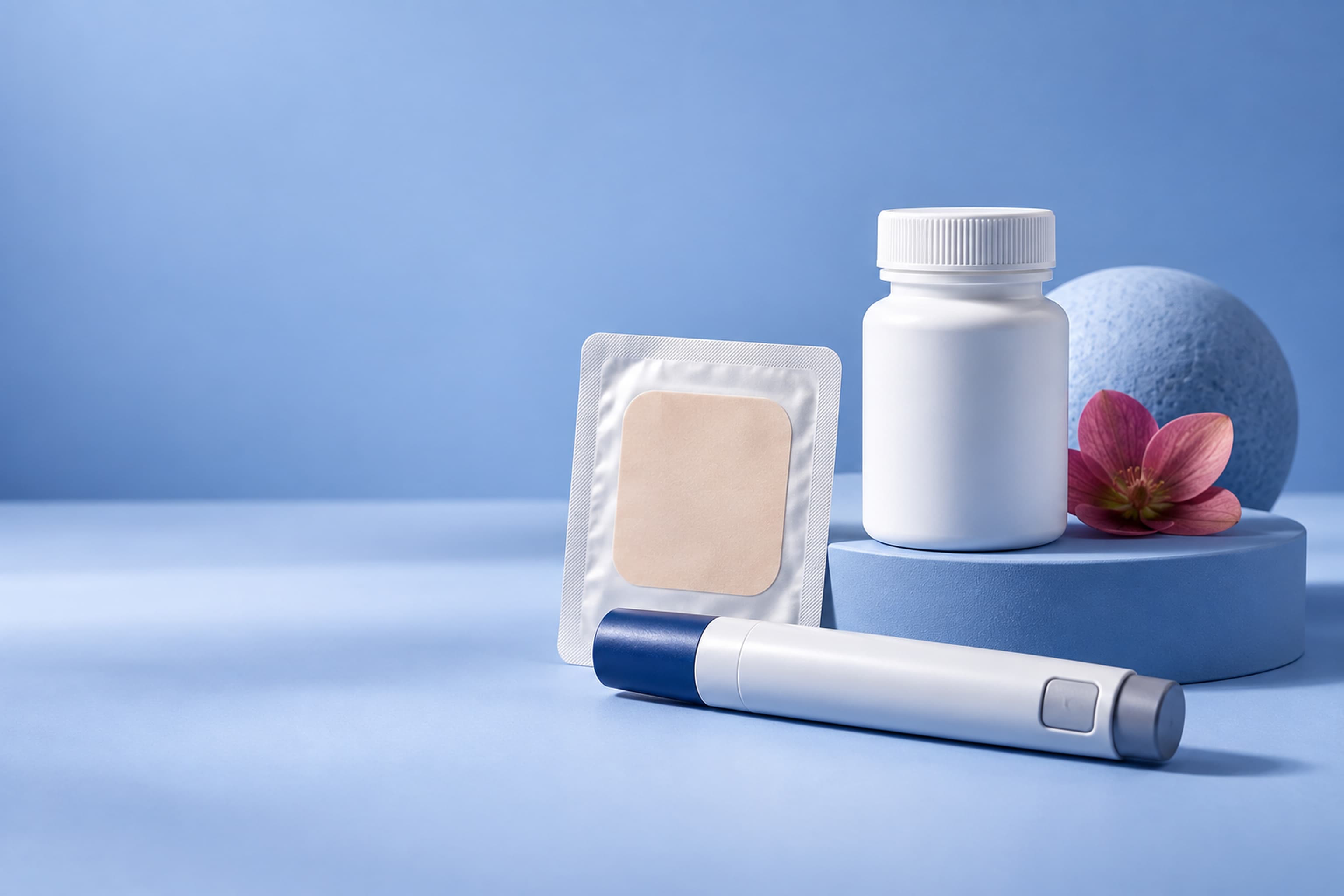
Read the strength and the change schedule separately
A label such as 0.05 mg/day describes the patch's nominal daily delivery of estradiol. It does not mean the patch should be changed daily. The packet separately states whether it is a once-weekly or twice-weekly product.
The cited twice-weekly US product is available in several daily delivery strengths. The prescriber chooses a strength for the indication and adjusts it according to response. A different brand can use a different patch size, adhesive, or schedule, even when the daily estradiol delivery is similar.
Check whether the patch contains estrogen alone or a combination of hormones. An estrogen-only estradiol patch usually needs a separate progestogen plan with a uterus. Keep both schedules available if the hormones come in different products.
Apply it to clean, dry skin on an approved site
Application sites vary by product. The cited twice-weekly label permits the trunk, including the abdomen or buttocks, and prohibits application to the breasts. Use the sites named in your leaflet; instructions from another brand may differ.
- Remove the previous patch when the scheduled replacement is due.
- Choose a clean, dry area without oil, lotion, damage, or irritation.
- Avoid a waistband or tight clothing that can rub the patch loose.
- Open the pouch when ready to apply it and remove the protective liner as instructed.
- Press the patch firmly onto the skin, checking contact around its edges.
- Rotate sites according to the product instructions.
The cited product directs pressing with the palm for about ten seconds and leaving at least a week before reusing the same site. Those are instructions for that product. Ask the pharmacist to demonstrate application if the leaflet is unclear.
Bathing, activity, and adhesion
A patch is intended to remain attached during its wear period, but heat, sweat, skin products, and friction can affect adhesion. Follow the leaflet's bathing and activity advice. If patches repeatedly peel or detach, review the application routine with the pharmacist and ask whether a different product is suitable.
If it falls off or you miss a change
Use the instructions for your prescribed patch. The cited twice-weekly label allows reapplying the same patch or using a replacement at another site after it falls off, while keeping the original change schedule. Another leaflet may direct immediate replacement.
For a forgotten application, the cited label directs using a new patch as soon as possible and continuing the original schedule. NHS guidance similarly advises changing a missed patch when remembered. Extra patches should not be added to make up for a missed dose.
An interruption can allow symptoms to return and can affect spotting or bleeding. Record the missed application and tell the prescriber if bleeding develops. Frequent missed changes may mean that another routine would be easier to maintain.
What to discuss if symptoms persist
Check use before assuming the dose is too low: the correct schedule, adhesion, approved skin site, and other medicines all matter. Avoid changing strength, cutting a patch, or adding patches without product-specific advice from the prescriber or pharmacist.
Track the symptoms that prompted treatment and any breast tenderness, headaches, nausea, or local irritation. A review can consider dose, a different patch, gel or spray, the progestogen, or another explanation for persistent symptoms.
Transdermal estrogen has a more favorable clot-risk profile than oral HRT in NICE guidance. The US patch label still contains contraindications, including previous clots, stroke or heart attack history, breast cancer, and liver disease. Application through the skin does not establish eligibility.
Store and dispose of patches carefully
Keep unused patches in their individual pouches until application and follow the packet's storage instructions. Used patches still contain hormone. The cited product directs folding the adhesive sides together and disposing of the patch where children and pets cannot reach it.
Keep the packet or a photograph of its label for appointments. The full product name and strength help the clinician distinguish a missed change, an adhesion problem, and an intended dose adjustment.
Sources: 1
Sources
References cited in this article.